"What Happened to Gas Station Attendants?" (opens in separate window)
when dissent becomes sabotage
saturday, april 25th, 2026
 There is a difference between dissent and sabotage. Between principled skepticism and strategic subversion. And increasingly, that line is being tested—not by the political Left, but by what can only be described as a counter-MAGA Fifth Column operating within the right itself.
[FULL TITLE: "When Dissent Becomes Sabotage: The Rise of the Counter-MAGA Fifth Column"]
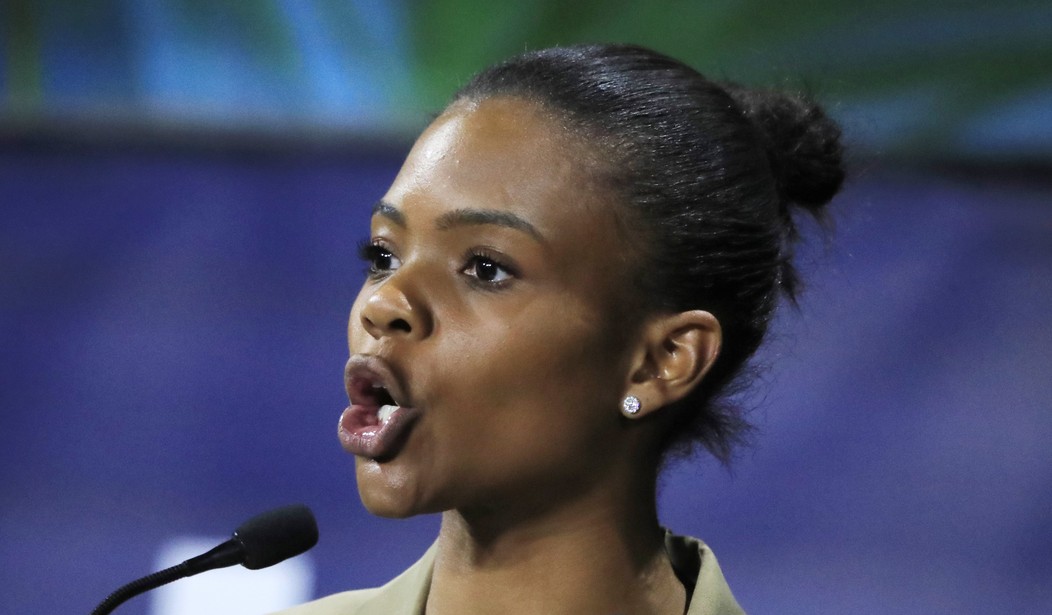
At a moment when the United States is engaged in active military operations to destroy the escalating threat from the Iranian regime—one that has openly pursued nuclear capability, funded proxy terrorism, and targeted American interests abroad—there has emerged a chorus of influential voices whose messaging consistently runs counter to the Trump administration’s interests. Figures like Tucker Carlson, Candace Owens, U.S. Republican Rep. Thomas Massie (KY-4), Joe Kent, Nicholas Fuentes, and others each operate in different lanes, with different audiences and varying degrees of influence. But taken together, their public commentary reflects a pattern that deserves serious scrutiny.
Their language is often framed as “America First,” their tone as anti-interventionist, and their posture as protective of American blood and treasure. One might say an “America Only” posture. But the cumulative effect of their arguments is something else entirely: doubt, hesitation, division, and a steady erosion of moral clarity and morale at precisely the moment it is most needed.
This is not about silencing dissent. It is about recognizing when dissent begins to function as active insurgency.
Iran’s leadership is not ambiguous about its objectives. The regime has spent decades refining a hybrid warfare model that blends conventional military development with asymmetric tools—terror networks, cyber operations, and information campaigns designed to fracture Western unity. The goal is not simply to defeat the United States militarily, but to weaken the will to act in the first place.
And information warfare does not require direct coordination to be effective. It only requires amplification.
When narratives that mirror adversarial talking points gain traction within domestic political discourse—whether intentionally or not—they serve a strategic function. When American voices consistently downplay Iranian aggression, question the legitimacy of counter-proliferation efforts, or redirect outrage inward toward allies rather than outward toward hostile regimes, they contribute to the very paralysis those regimes seek to create.
That is not conjecture. It is the observable reality of modern information conflict.
What is emerging within this space is best understood as a Black Pill Axis—as former FBI Deputy Director Dan Bongino has observed, a convergence of voices shaped by political aspiration, grievance, and greed. Voices on the right preach a doomer narrative that the Trump administration is accomplishing nothing, and then ignore substantive accomplishments, such as the FBI’s unprecedented sweep of arrests, foiled terrorist plots, and counterintelligence apprehensions.
Wedge issues are relentlessly propagated by a new podcasting class whose only fealty is to the algorithm.
Layered into this dynamic is a more personal—and more revealing—development: the participation of a subset of former federal agents and self-described whistleblowers who have migrated into this space. Many of these individuals were, not long ago, vocal supporters of President Trump and aligned with his broader law-and-order agenda. Yet rather than advocating for targeted reform or institutional accountability, they have embraced maximalist positions—calling for the defunding or outright dismantling of the
FBI itself. They relentlessly attack FBI Director Patel, and increasingly, Trump himself.
That shift is telling.
When support appears contingent on personal outcome—when expectations for position, influence, or recognition go unmet—and when that unmet expectation is followed by a turn toward absolutist rhetoric aimed at dismantling the very institution one once served and the MAGA movement that once empowered them, it raises legitimate questions about the underlying motivations at play.
This is symptomatic of the entire doomer enterprise.
At its core, conservatism has always rested on a clear-eyed understanding of human nature, the necessity of strength, and the moral responsibility to confront evil where it exists. The American Right has historically understood that peace is secured through deterrence, that credibility matters, and that hostile regimes do not simply evolve into benign actors if left unchallenged.
President Trump’s approach to Iran reflected that tradition. Maximum pressure was not about endless war. It was about preventing one. Strategic deterrence was not reckless—it was necessary. The notion that confronting a regime actively pursuing nuclear capability is somehow dangerous, while passivity is prudent, represents a profound inversion of reality.
And yet that inversion has become a recurring theme within the counter-MAGA Fifth Column.
The issue is not that these voices raise questions about intervention. Those questions are legitimate. The issue is that the answers they offer point in one consistent direction: toward disengagement, toward distrust of American power, and toward a reframing of adversarial threats as either exaggerated or irrelevant.
Patterns matter. Outcomes matter.
If the consistent effect of a set of arguments is to weaken American resolve, isolate the United States from its allies, and create confusion about the nature of the threat, then those arguments should be examined for what they produce—not merely what they claim to intend. The “just asking questions” tactic is an old propagandist ploy, perfected by radicals like Saul Alinsky.
Adversaries do not need formal alliances inside the United States to benefit from this dynamic. They only need narratives that achieve the same result. Our enemies, both foreign and domestic, need only amplify.
Some of this can be explained by fatigue. After two decades of war, the American people are understandably cautious about foreign entanglements. Some of it is rooted in distrust—often justified—of institutions that have failed to maintain transparency or accountability. And after the abuses suffered during the COVID era, Americans are now overly suspicious of authority and expert opinion. But fatigue and distrust, left unchecked, can be shaped into something far more dangerous: a reflexive opposition to any projection of American strength, regardless of context.
That is precisely the environment adversarial regimes seek to cultivate.
The conservative movement now faces a test—it must distinguish between serious strategic debate and rhetoric that, whatever its intent, produces strategic confusion.
© 4.17.2026 by John Nantz, "Townhall".
A Day In The Life.

>After sleeping on the LR couch, I woke up at 10:00a on Saturday, a mild, 59°F, windy, overcast, breezy morning, still not feeling 10%, I made coffee, fired-up the Win-7 Pentium HP Desktop to let its 32 million lines of code load, had breakfast, had a couple smokes in the garage and checked the leftover errands list. I scanned the weather -- nice but dry weather for the next 5-6 days, and ***FIRE HAZARD*** still-in-effect region-wide -- and the rapidly-breaking news, tuned into one of last week's "CP Show Podcast", and relaxed for the morning.
I was so sick and weak last night, I couldn't make it up the stairs, so I slept on the LR couch. I slept fine and was rested and feeling OK this morning. The R.S pain started around 1p, and lasted into the evening, despite 2 50mg Tramadol, a couple of Rolling Rock beers and an aspirin. Sucks to be me, last night and now.
I skipped the news, caught it all on my desktop, tried to watch "Ancient Aliens", but was still very tired, so I bagged it around 10, and headed upstairs. The heavy rain started, as forecast. Tomorrow's another day.

Up at 8:15a on Sunday, awakened by the heavy rain, a windy, cool 46°, i made coffee, and scanned the weather and news. The ***FIRE HAZARD WARNING*** should be lifted now. I had pain, but the aspirin helped; no need for the powerful 50mg Tramadol, just yet. I got ready for the day, started a load of laundry, and had lunch.
I finished some condo chores and the laundry just after mid-afternoon, had a nice 2hr snooze on the LR couch, and as temps dropped quickly outside, I enjoyed the back patio.
I closed the condo, tuned into the evening news, had dinner and switched to Discovery's "Filthy Fortunes" and TWC's "Timber Titans". Lights out at 1a.
Awake and up at 8:30a on Monday, a bright, very cool/cold with flurries, sunny 42° morning, I upped the heat -- wasn't I just using the AC 2-3 days ago? -- made coffee, and tuned into "CP Show" from 9-12. I have 4 stops to make on my usual Monday R/T to points south of York, but will delay 1 (Weis Pharmacy) until tomorrow, if I'm feeling weak and tired, after 3 stops.
I left at 12:30p, and traffic was light on the way south, but got nuts on the return trip due to the several Met-Ed pole replacement chokepoints and tree trimmer projects along the route. I unloaded, had lunch and took a short 2hr nap. Termps dropped quickly after I got back up, and another ***FREEZE WARNING*** was issued for tomorrow. I closed the condo, tuned into the evening news, ha dinner and watched some unremarkable shows on History and Discovery -- can't remember exactly which ones -- until 1a. Good night, Irene.

Amelanchier arborea "Downy Serviceberry"
Up at 7a on Tuesday, a sunny, windy, very cool 41° morning, I upped the heat, made coffee, tuned into the "CP Show" 9-12, and scanned the news and weather. Nice day ahead. I had 3 local errands, did those and got back by 1:30p. Dear Heavens: I'm soooooooooooo sick of politics and politicians. If I could I'd ban it all and "disappear" ALL OF THEM.
The lower R/S back, both legs and feet pain -- courtesy of Mr Neuropathy and Mr Sciatica -- were in full force, all day, and it was painful and miserable. I took 250mg Bayer Aspirin and 50mg Tramadol, used a heating pad and did a leg stretching exercise, and those helped somewhat, but amputation at the waist, would have worked better. Sucks to be me, right now.
After a 2hr nap, I watched the evening news, closed the condo, and switched to History's "Curse of Oak Island" and Discovery's "Filthy Fortunes", until 11:30, and unplugged.
I was unable to sleep all night, due to intense R/S pain, and at 4:30a, came downstairs to the LR couch, where I couldn't sleep either. Damn. Aspirin, heating pad and Tramadol... nothing was working. I emailed Sherry about rescheduling today's get-together, had some breakfast and tried the couch, again. I was down in the afternoon, for almost 6hrs. There was slightly less pain siting in my comfy Office chair, so I went with that.
After more aspirin, I called Sherry and we made plans for tomorrow, had a light dinner, watched news and switched to Discovery's new series, "Conspiracies & Coverups", until 11:30, and bagged it for the night.
Up at 8:30a on Thursday, a sunny, mild 51° morning, forecast to get to 80°, I upped the heat, made coffee, scanned the news and weather, and tuned into the "CP Show". The lawncare crews were on-site mowing and making all kinds of noise. I had lunch, Sherry arrived at 1p, but we had to wait for my Weis Market (Enola PA) delivery -- 12-2 window -- which was delayed and finally arrived at 3:15. After unpacking, we decided it was too late to go to our planned 2 locations -- SKH Garden Center and Flinchbaugh's Orchard & Market -- so we spent the afternoon at my place, enjoying our own company.

Sherry left around 6, I watched the evening news, switched to "Discovery's "Expedition X Files" and called it a night around midnight.
Awake at 7a on Friday, I rolled over for another 90mins, and got up at 8:30, on a sunny, 56° morning. I upped the heat, made coffee and tuned into the "CP Show" from 9-12. I have a 1p Dr's app't, so I planned on leaving at 12:20, to get there and go thru check-in, since their damned website was adamant in demanding a CC for a $35 co-pay, and wouldn't let me pay cash at the offices.
After breakfast, I got ready for the day, and left. Traffic was heavy, with Friday lunch hour, and I made it with time to spare. The app't went very well, and I was out of there in 35mins. Just 2 stops to make on the way home, I was back by2:30, had lunch, and took a 2hr nap. T-storms moved thru the area, but we got very little rain..
Even more t-storms moved into and thru the York-Lancaster areas, early evening, but no serious rain here in York. I had dinner, watched the evening news, and switched to Discovery's "Gold Rush" and "Gold Rush: Mine Rescue" until 1a, and quit for the night.
Tomoprrow starts a new week, here in the "Journal", and it's a clear week ahead for me. I'll call Sherry over the weekend, and see what she's got going on, and perhaps get some time together.
The Geopolitics of Epic Fury
As media hype falters and globalists posture, Trump’s campaign to secure the world’s chokepoints reshapes power—and leaves Iran and its allies with little leverage left.
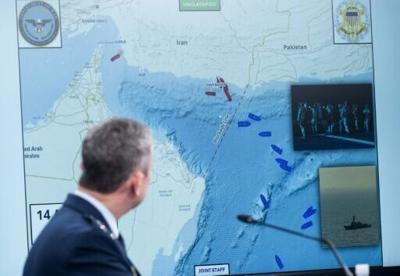
Possibly the most amusing fake news item Saturday morning came from The New York Times. Under the rubric “Iran War Live Updates,” a headline screamed, “Iran’s Military Says It Has Reimposed ‘Strict Control’ of Strait of Hormuz.” To which an inquiring mind wants to know, “What Iran military?” It’s gone, Kemo Sabe. The floating bits are at the bottom of the sea. The terrestrial bits have been crushed, blasted, pulverized, or incinerated. Ditto most of the bits that flew. Which is why a healthy skepticism must severely discount the Times’s breathless comment that “A shipping monitor run by the British Navy said Saturday that it had received a report of Iran’s Revolutionary Guards firing at a tanker in the strait.” Click the link. What it says is that someone told someone else that something “was reported” to have happened, but no one and nothing was hit or damaged.
I don’t mean to single out the paper that President Trump accurately, if impolitely, calls “the failing New York Times.” About all things Trump, The Wall Street Journal is just as bad. Between February 28, when Operation Epic Fury began, and last week, when President Trump allowed Iran to lift its head out of the water briefly in order to surrender, the WSJ has run countless stories explaining how, despite appearances, Iran was actually winning the conflict. On Saturday, the Journal greeted Iran’s braggadocio about the Strait of Hormuz just as enthusiastically as did the Times. If your version of those papers came with a magic subtext mood reader, you would have been able to hear the excited Molly Bloom-like cries wafting off the page: “Yes! Yes! Yes! Please let it be so! Please let something bad happen to US forces so we can wipe that grin off Trump’s face! Please!”
So maybe some dead-enders in the IRGC are jumping up and down, making threats, or even lobbing missiles or other ordnance at ships in the Strait. They won’t be doing so for long.
On Friday, President Trump delivered a few status reports on Truth Social. (1) The Strait of Hormuz is fully open and “ready for business.” (2) The naval blockade will remain in full force until we are satisfied that Iran has complied 100 percent with our demands. (3) That should happen quickly because “most points” have been agreed on. The president also reported that Iran had promised never to close the Strait of Hormuz again. “It will no longer,” he wrote, “be used as a weapon against the World!”
It has been a merry few days. On Friday, Iran agreed to let America collect and remove its uranium, a key US demand going into the conflict. Also on Friday, Trump announced that the Strait was open for business. That was NATO’s cue to waddle into the limelight and offer to help. President Trump was not amused. But the rest of us can be. “Now that the Hormuz Strait situation is over,” President Trump wrote, “I received a call from NATO asking if we would need some help. I TOLD THEM TO STAY AWAY, UNLESS THEY JUST WANT TO LOAD UP THEIR SHIPS WITH OIL. They were useless when needed, a Paper Tiger!”
There, Trump goes again, telling unpalatable truths. Do you believe in coincidences? Within hours of President Trump’s announcement that the Strait of Hormuz was open, the British make-believe Prime Minister Keir Starmer went to Paris to co-host a 40-nation “virtual summit” with French President Emmanuel Macron. Their goal? To open the Strait of Hormuz. For those keeping track, the US Navy, which had actually opened the Strait, was not invited to this romper room play date. As one commentator put it,
This is 40 guys showing up to a house fire three hours late with a PowerPoint titled “Fire Response Coordination Initiative,” while the homeowner is already back inside watching TV.
Meanwhile, Iran’s foreign minister fully capitulated on camera today. Oil crashed 11 percent in minutes. Iran has reportedly agreed to suspend its nuclear program indefinitely and will not receive any frozen funds. Trump says the deal is mostly done.
The two-week ceasefire that President Trump called expires this Wednesday. What then? “What if there is no final deal by the deadline?” a reporter asked. “I don’t know,” President Trump said. “Maybe I won’t extend it—but the blockade is going to remain. . . . Unfortunately, we’ll have to start dropping bombs again.”
Understandably, the situation in Iran has mesmerized the world’s attention these last several weeks. But it is important to place that conflict in a broader strategic context. On Saturday, the US signed a defense agreement with Morocco concerning the Strait of Gibraltar, the chokepoint between the Atlantic Ocean and the Mediterranean Sea. Just a few days ago, the US inked an agreement with Indonesia granting “expanded operational access” over the Strait of Malacca, through which nearly 80 percent of China’s oil imports flow. Last year, Trump negotiated the neutrality of the Panama Canal, sidelining the Chinese companies that had quietly stepped in to manage access to the canal. Gibraltar. Malacca. Hormuz. Panama. In just over a year, President Trump has opened the world’s major chokepoints under the aegis of American oversight.
In a couple of weeks, Trump will travel to Davos, Switzerland, to participate in—or to school—the globalist citadel at the World Economic Forum. “You could say he is walking into the lion’s den,” observed one commentator, “except that he is the lion.” Trump will be bringing his entire “demolition crew,” including Treasury Secretary Scott Bessent, Commerce Secretary Howard Lutnick, and Energy Secretary Chris Wright. This will not be a Kumbaya Summit. It will not be about some “Green New Deal,” forging an alternative to the US dollar, or proliferating international NGOs to further the globalist agenda. Operation Epic Fury includes what Scott Bessent called Operation Economic Fury, and it is being deployed not only in Iran but also wherever anti-American forces pool and fester.
Meanwhile, President Trump announced that Israel and Lebanon have agreed to a ceasefire. This comes in the wake of Lebanon essentially outlawing Hezbollah. The Middle East is reshaping itself before our eyes. It is good news for those interested in peace and prosperity. It is bad news for misogynistic mullahs and other members of the theocratic death cult that has been terrorizing the world for decades. There are still regime thugs prowling the streets of Iran looking for bare-headed women or protestors to hang or shoot. But there are also an increasing number of reports of the Iranian people ambushing the ambushers, taking out the Basij and IRGC terrorists. There will be cries and whispers for a short while from the dying Iranian regime. But for all intents and purposes, the story is over. We’re into the coda or epilogue now. There might be a few plot twists and turns yet, but we know how the saga ends. America wins, the mullahs lose, and so do the globalists at the trough in Davos, and China, with its dreams of a BRICS hegemony in tatters.
© 4.19.2026 by Roger Kimball, "American Greatness".
How Iran Committed Suicide
How does the supposedly most fearsome regime in the violent Middle East now find itself on the verge of an utter economic and military collapse?
Iran’s half-century-long deadly terrorist reputation peaked with the October 7, 2023, massacre in Israel that it helped fund and coordinate.
Iran’s terrorist ambitions of running the Middle East had accelerated after witnessing Joe Biden’s cognitive decline and his administration’s distancing itself from Israel. Biden’s humiliation by a series of Chinese slights and the Russian invasion of Ukraine further eroded American deterrence. European appeasement was another force multiplier of Iranian hubris.
The theocracy apparently assumed that its supposed “ring of fire” terrorist proxies—in Syria, Iraq, Lebanon, Gaza, and Yemen—could lethally squeeze Israel, now reeling from the greatest single-day loss of Jewish life since the Holocaust.
The theocrats further conjectured that, like most incumbent presidents, Biden would be reelected and continue to revive the disastrous Obama-era appeasement.
Once Biden had begged Iran to reenter the Iran deal, lifted sanctions, sent cash, and removed terrorist designations from some of its proxies, the Khamenei regime, now flush with new oil revenues, logically stepped up its nuclear enrichment.
Tehran was assured that not even Israel would dare strike its nuclear labyrinth, given its reputedly state-of-the-art Chinese and Russian air defenses—and its own retaliatory armada of thousands of ballistic missiles and drones, augmented by perhaps 200,000 short-range rockets of its Arab terrorist clients.
But Iran sorely miscalculated.
The cognitively challenged Biden reelection candidacy imploded, replaced by the anemic Kamala Harris nomination—and with it, the Democrats lost power.
Worse, the supposedly politically dead and buried Trump pulled off the most amazing political return in modern American history.
Benjamin Netanyahu survived the political implosions following October 7 and now had a supportive American presidency.
A cleverer Iran would have stopped the bombast, downplayed its terrorist connections, and returned to its trademark delay-delay-delay style of negotiations—in hopes that the Europeans, the terrified Gulf monarchies, the anti-Israel Democrats, and the paleo-Right would combine to prevent Trump from doing what seven prior presidents had claimed was essential but had never dared to do.
But instead, Iran kept bragging about its air defenses and its vast missile fleet and egged on its expendable Arab surrogates.
It had no inkling that October 7 had reminded Israel that it could never trust its Islamic enemies and that its extinction, not mere defeat, was the aim of the Iranian nexus.
In truth, Iran’s ferocious reputation was never based on any actual success on the battlefield.
Its forte had always been enlisting Arabs and other Middle Easterners to kill Israelis, Americans, and other Westerners in Europe, Syria, Lebanon, Iraq, and Afghanistan.
When Israel preempted this and destroyed the Iranian air defenses during the 12-Day War in 2025, and the Americans pounded its multi-billion-dollar nuclear facility, the world saw for the first time how hollow the theocracy had always been.
Even its patrons, Russia and China, privately despised Iran and considered it only a useful anti-American and anti-Western tool.
But once Russia got mired in Ukraine and lost Syria, it was forced to cut Iran loose.
The Chinese—who have turned a million Muslim Uyghurs into indentured serfs—saw Iran merely as a cut-rate gas station.
As long as it was free to buy sanctioned Iranian oil on the sly, China sold Iran almost every weapons system Tehran wanted.
But again, the Chinese connection was predicated only on Iranian utility—which has now mostly evaporated.
The Gulf sheikdoms loathed and feared Iran but were too close to the monster to dare poke it. And so they appeased and bribed Iran and hoped their money, oil, and the US military would deter the mullahs.
That strategy, too, has imploded, Iran having blasted the Gulf with more missiles (5,000) than it had sent (500) even against the hated Zionist entity.
Europe for decades appeased Iran to buy its oil, to keep the Strait of Hormuz open, and to protect itself from Iranian-funded terrorists. Now that the US has defanged Iran, Europe is likely to pile on.
Iran has no government. Freelancing apparatchiks from the military, the Islamic Revolutionary Guard Corps, the government, and the theocracy fear being dubbed soft by their competitors, but all of these fear a popular uprising and an overdue noose strung over the collective neck of the regime even more.
They have no idea what Trump will do. Their signature methods of delaying and bartering won’t work with him, especially when time is no longer on Iran’s side, and they have no military left.
The bankrupt regime is bleeding over $400 million a day in revenue. It faces a loss of half a trillion dollars from its half-century-long investment in a vast and now obliterated military-nuclear-industrial complex and arsenal.
In sum, Iran can no longer credibly bluff, threaten, or delay. Not even the American Left and the European appeasers can save it.
Its 47-year façade is in ruins.
© 4.23.2026 by Victor Davis Hanson, "???".

