"What Happened to Big Boy Burgers?" (opens in separate window)
the earth moves just a bit
saturday, may 16th, 2026
 Expect a consequential week. The Persian Gulf remains closed and colossal oil slicks leak out of Kharg Island while Iran blusters and stomps its feet. No one can even try to buy its oil anymore, not even China. The sanctions are too onerous. Iran’s wells must be shut in now. Imagine how the production chiefs out in the oil fields are howling at their insane IRGC overseers. Iran has no economy left operating. Iran’s domestic security force, the Basij (Sâzmân-e Basij-e Mostaz’afin, or “Mobilization of the Oppressed”) is strangling anyone who expresses discontent in the streets, not a good look for a regime that can’t survive without the pretense of popular support.
Late Sunday, the US President rejected Tehran’s latest conditions for peace out of hand. They are trying to jerk the whole world around, even while they whirl around the drain. Despite what you read in The New York Times — Iran’s US-based chief cheerleader — it is probably a matter of days now before capitulation. The ball is in America’s court this morning, a real hanging lob shot. The return is apt to be hard. Of course, whatever official utterances come out of Iran, you must discount by about 99.9-percent. For now, there is nothing but the morning fog of suspense.
But strange doings are a’foot elsewhere. You might have noticed that the UK’s labor government got drubbed in local elections, losing nearly 1,500 council seats, a humiliating repudiation. It’s a matter of days before PM Keir Starmer will have to hang it up. His possible replacements are utterly unknown to Americans — Angela Rayner, a former Deputy PM, Energy Secretary Ed Milliband, Health Sec’y Wes Streeting — and any of them is just a place-holder for the election’s main winner Nigel Farage of the Reform Party, which exists wholly outside the age-old British political transect of Labour / Tories.
The Labour Party, you see, is lately as loathsome in the altogether to British voters as its current avatar, Sir Keir (Knight Commander of the Order of the Bath, KCB), whose latest act was to extend social welfare benefits to the additional wives of poly-marital Muslims. Way to go! Why not just travel the island empire from town-to-town and slap every indigenous Briton in the face? And the Tories (putative Conservatives), well, just fuggeddabowdem. Sir Keir’s Tory predecessor as PM, Rishi Sunak, screwed the pooch for his party into the next twenty years allowing net Third World migration to hit record highs while the kingdom crumbled.
The way it works over there, Sir Keir or whoever takes over from him, asks King Charles to dissolve Parliament, and you get a sudden national election short of Parliament’s regular five-year term. And so, sometime in the months ahead, Nigel Farage will become Prime Minister and things will change-up bigly in Britain. Mr. Farage will have to contend, among other things, with Donald Trump’s dismantling of whatever was left of Britain’s stealth neo-colonial command of global finance through the British banking system. The question really is: can Farage arrest his country’s sickening slide into becoming an Islamic caliphate, with all the Third World bells and whistles? Can he possibly even start shipping the most recent arrivals back to where they came from? Can he do what Mr. Trump is attempting in the USA and turn the UK back to an economy based on the actual production of goods rather than financial finaglery?
Oddly, as the old Mother Country rejects the Globalist tool, Keir Starmer, Canadian PM Mark Carney attempts to highjack the Globalist baton for the rest of Anglosphere remnant of the old empire. And also, in case you didn’t notice just days ago, King Charles’s attempt to kiss up to Mr. Trump, despite all the mutual flattery and gala ceremony, was a failure for the King of England. That is to say, he did not succeed in getting Mr. Trump to back off even a little bit from reducing the Crown’s imperious control over world affairs.
And so, in the background, you see former president Barack Obama skulk into Ottawa to plot around all those developments with Canadian PM Carney, who is positioning himself to operate as the British Empire’s shadow PM-in-absentia — like the Pope in Avignon during the tumultuous 1300s. That is, Carney, former head of the Bank of England, is electing himself to oppose Nigel Farage, with the stealth assistance of America’s shadow leader of the Democratic Party, Mr. Obama, who actually represents the Islamic-Marxist chimeric alliance that Globalism has become. Why is not Barack Obama not subject to violation of the Logan Act for this?
Alas for that shifty operation, the Democratic Party in America is now way back on its heels after the double punch of flubbing its Virginia redistricting gambit and then the SCOTUS decision against racial gerrymandering that will cull dozens of racially-engineered Democratic districts out of the US House of Representatives. Out the window is the Democrats’ scheme to impeach both Mr. Trump and Veep Vance in 2027 so as to install Hakeem Jeffries in the White House. Yeah, really. That was their plan. . . suddenly up in a vapor. And the DOJ’s prosecutions of the Party’s multitudinous grifters and color revolutionists has barely even begun. My Gawd, they are sinking really fast now.
And mid-week, it’s off to China for Mr. Trump to meet Uncle Xi. How badly do they want their oil supplies switched back on? And what are they prepared to do, to make that happen? Buckle up for a wild week.
© 0.0.2026 by James Howard Kunstler, "ClusterFuck Nation".
A Day In The Life.

After lunch, I had a couple errands to do, and got back around 2p, with heavy weekend traffic. I did more paperwork, chipping away at the ever-growing pile on my desk, watched the eve3ning news, and switched over to History's "Ancient Aliens" and TWC's "Minutes To Disaster" until 1a, and unplugged.
Up at 7a on Sunday, a cloudy, rainy, cool 54°, I upped the heat, made coffee, and scanned the weather and news sites. I had 2 loads of laundry, and some condo chores to do, so I got ready for the day, and started the usual Sunday Routine. By 3:30, I was finished with everything, grabbed a 2hr nap on the LR couch, had the last 2 mugs of morning coffee to wake up, and watched the evening news. I called Sherry and we set a afternoon to get together, switched to Discovery's "Filthy Fortunes" show until 12:30a, and quit for the night.
Awake and up at 7a on Monday, a cloudy, chilly 50°, I fired-up the furnace, made coffee and checked the news and weather. My usual morning talk show guy has left the airwaves, and is now running for a seat in the US Congress, here in PA. Heh. I tuned into the "CP Show" from 9-12, got ready for the day, and left for my usual Monday 3-4 errands, 4 today, and trip down south of York, at 12:30p.
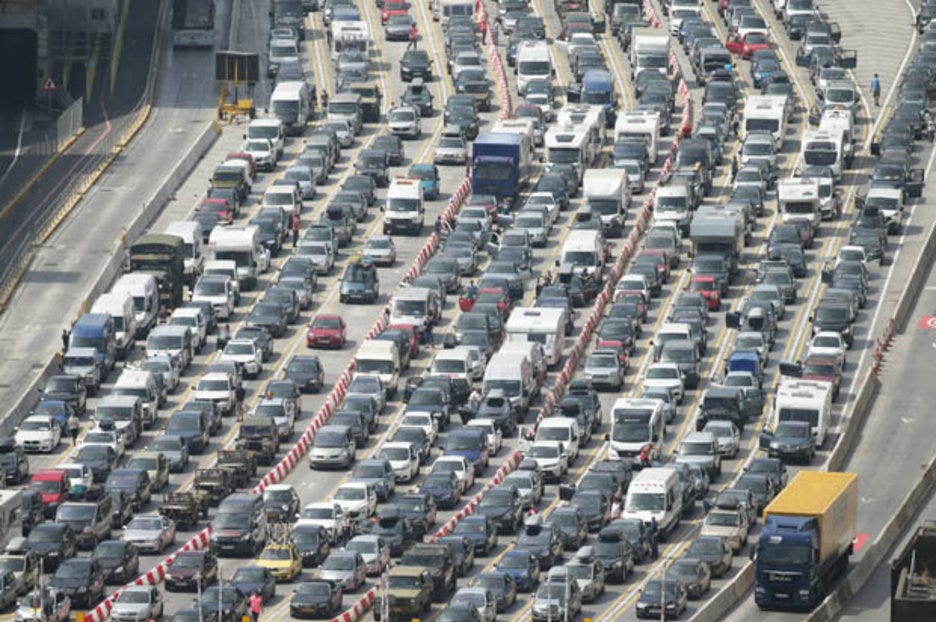
Traffic was not heavy, so I made very good time, except for several construction chokepoints. Post office, convenience store, cleaners, pharmacy-market, and I was home by 2p. I unloaded, had lunch and took a short 1hr snooze. For the past 5-6 days, I've had a lot of R/S [pain, but yesterday and, especially today, I had N-O-N-E. Woo-hoo. I still take a 250mg aspirin in the morning, but no Tramadol. Doesn't suck to be me, for a change.
A little groggy from the nap and a couple of Rolling Rock 16oz 'Tall Boys', I made dinner, watched the evening news, and switched to MT's "Iron Resurrection" until 11:45p, and bagged it for the night. My cleaning lady's in at 8:30a.
Up at 5:30a -- 0-Dark-Thirty -- ahead of the alarm, on Tuesday, I upped the heat, made coffee, and had a couple smokes in the cold garage. It was a "brisk" 39°, and the ***FROST WARNING*** notices were still posted on the weather-related websites. BFD. I tuned into tghe "CP Show" from 9-12, went out for a walk around the 40-unit complex, and almost didn't make it back, due to the pain. I decided to stay inside and take some aspirin, instead of doing a few errands.
It blows my mind that NASA is able to receive a signal from 4.67 billion miles away, but I lose my cellphone's WiFi signal, in my Office-Sunroom, when talking to Sherry.I watched the 6p evening news, had a light dinner, switched over to History's "Curse of Oak Island", and quit for the night. Lights out.
Awake and up at 7:39a on Wednesday, a sunny, breezy, 51° morning, upped the heat, made coffee, and checked the news and weather websites. The sunny day soon disappeared as t-storms moved into the area and temps dropped. ***SEVERE THUNDERSTORM WARNING*** for early evening, but hey, we need the rain. I got ready for the day, tuned into the "CP Show", from 9-12, and relaxed.

I did a few condo chores, took aspirin for the R/S pain, and tried to take a short walk down the street, but the pain was too bad, so I gave that up. I watched the 6p evening news, and switched to Discovery's "Conspiracies & Cover-Ups" and MT's "Roadworthy Rescues" until 1a. Lights out.
Awake at 6a, and up at 7 on Thursday, a mostly sunny, high overcast, windy 49° morning. I fired-up the furnace to take the chill off, made a new bag of Kona Coffee, scanned the news and weather, and tuned into the usual "CP Show". I had breakfast and Sherry arrived around 1p.
We'd planned to make a trip down south to The Markets at Shrewsbury, but when w arrived, the gigantic complex was closed due to Ascension Day, so we drove west to Brown's Orchards <> Farm Market, where we got all kinds of goodies. 2+ hours later, we were back at my place, and I unpacked my stuff, after we'd loaded Sherry's stuff into her car. She left after 5p, before the t-storms rolled into the York area.
I had dinner, watched the evening news, and switched to Discovery's "Caught!" and History's "Mysteries Xplained" until 1a. Good night, Irene.
Upo at 8a on Friday, a sunny, windy, 'brisk' 51° morning, I upped the heat and made coffee. Lots of noise from Unit #107, next door, as a 3-5 man crew moved large furniture from the garage into trailers and hauled it away. The unit's sold, and initially, I thought it wa people moving in.
No errands for the day, so after breakfast and then lunch, I swpt out the garage, and took a 3½hr nap and, after waking-up around 4:30p, had the remaining morning's Kona Coffee. Thunderbird eMail 's IMAP Server is giving me problems again, as I can receive but can't send or reply. Damn.
I watched the evening news,a FOX News recap of Trump's China trip, and switched to History's "The unXplained" and MT's "Garage Squad" until 12 midnight. Lights out.
Tomorrow starts a new week, here in the "Journal" and it's a clear one for me. Sherr's got another full plate with the house sale etc, so we'll see when we can get some time together.
Trillions of miles of data: Your car is spying on you, and it's only just the beginning
From your weight and facial expressions to your destination, cars collect a startling amount of data about you. Some of it may even raise your insurance costs. But you can take some simple steps to limit what they know about you.
Cars used to mean freedom. When I first got the keys to the old family Toyota it was a rite of passage, a sign I was old enough to step away from the watchful eyes of my parents and enter a world where time and decisions were mine alone. Things change.
Modern cars are computers on wheels, and giant corporations are using them to suck up intimate details about your life and make more money. If you think driving today is a chance for solitude and independence, think again. And it looks like it's about to get a lot worse.
Car companies will tell you themselves if you wade through their privacy policies. The information they harvest can include precise location data about everywhere you go, who's in the car with you, what's on the radio and whether you buckle your seatbelt, drive too fast or brake too hard. Some can gather details you might not expect like your weight, age, race and facial expressions. Do you pick your nose? Some cars have cameras on the inside pointed at the driver's seat. And most come with internet connections that can ship off that data as you drive in blissful ignorance.
This is a privacy problem that can cost you money. Among the biggest customers for car data are insurance companies, and they're using it to charge some people higher prices. But there's no telling where your information is going. Some car companies admit they sell your data, but they don't have to say who's buying. That's to say nothing of the fact that you might find it a little creepy. Most consumers, experts say, have no idea it's even happening.
"People would be shocked at the number of data points that their car collects and transmits to other people, either the manufacturer or third-party applications," says Darrell West, a senior fellow in the Center for Technology Innovation at the Brookings Institute in Washington DC. "It basically means your life can be recreated almost on a second-by-second basis."
Feeling uncomfortable yet? A federal law is about to increase the amount of data your car can gather about you. It will soon require American car companies to install infrared biometric cameras and other systems to scan your body language, track your eyes or other aspects of your behavoiur to detect whether you're too drunk or tired to drive. But it will also open up a whole new trove of data about your health and your habits. There are no rules limiting what the car companies can do with that information.
With automakers set to expand their data empires, this is a critical moment to understand what's happening under the hood and how it affects you Of course, there are benefits too. Internet-connected cars can be more convenient. The sensors they bristle with can make driving safer and more comfortable. Insurance companies could decide to charge you less because you're such a good driver.
But with automakers set to expand their data empires, this is a critical moment to understand what's happening under the hood and how it affects you.
The data superhighway
If your car is even relatively new, it's probably involved. The consulting firm McKinsey found 50% of cars on the road in 2021 had internet connections and predicted the number will rise to 95% by 2030. If your car is hooked up to the internet, privacy is almost certainly an issue you need to care about.
Car companies can also snoop when you hook your phone up to the infotainment system, or if you use certain apps made for driving. Some drivers also use insurance companies' telemetrics system, which monitor you in exchange for potential discounts.
A 2023 analysis by Mozilla, the maker of the Firefox browser, examined the privacy policies of 25 car brands. Every one failed to meet the privacy and security standards that Mozilla uses to compare brands. Mozilla said cars were "the worst product category we have ever reviewed for privacy".
According to the report, car companies reserve the right to collect details including your name, age, race, weight, financial details, facial expressions, psychological trends and more. Kia's privacy policy, for example, suggests the company may even collect details about your "sex life" and general health.
Kia spokesperson James Bell says the company has never actually collected data on drivers' sex lives or health. These details only appear in Kia's privacy policy because the company is listing California's definition of "sensitive data", he says. Bell says Kia's privacy practices are transparent and the company only shares data with insurance companies if drivers opt in. The company did not explain what kinds of "sensitive data" it does collect, however.
Serenity Strull/ Getty Images Privacy experts say cars are some of the most invasive products in our lives (Credit: Serenity Strull/ Getty Images)Serenity Strull/ Getty Images Privacy experts say cars are some of the most invasive products in our lives (Credit: Serenity Strull/ Getty Images) Some of that might be hard to picture, but cars are littered with sensors: in the seats, the dashboard, the engine, the steering wheel, you name it. Many cars, for example, have cameras inside and out. If you're doing something in a modern car, chances are there's a way for companies to learn about it.
Mozilla found 19 of the car companies said they might sell your data, and that's exactly what's happening. For example, both state and federal agencies in the US took action against General Motors (GM) for allegedly selling car location data without consent. US Senators have accused Honda and Hyundai of similar practices – and these are just the examples the public knows about.
"They're taking all the information they collect on you, which is a lot, and using it to make inferences about who you are, how intelligent you are, what your psychological profile is, what your political beliefs are," says Jen Caltrider, a privacy analyst who led Mozilla's car research. "That's the stuff people don't necessarily think about."
There are basically no rules about who can buy this data or what its used for, Caltrider says. It can be used to market things to you. Companies could used it in hiring decisions. Law enforcement can buy car data when they can't get a search warrant. Once it leaves your dashboard, you have no control over where it ends up.
It may be getting worse Thi
s is about more than companies snooping on your private life. For example, General Motors sold driver information to a company called LexisNexis, a data broker that buys and sells details about consumers. A driver who got a copy of that data reportedly found LexisNexis had 130 pages of information, detailing every trip he and his wife took over six months. He told the New York Times that after his insurance costs jumped 21%, an insurance agent told him the data was a factor. LexisNexis did not respond to a request for comment.
The US Federal Trade Commission took action, and GM is now barred from selling vehicle data for five years – but it's free to resume the practice afterwards so long as it obtains express consent from drivers and follows other conditions. Meanwhile, LexisNexis and other companies are still selling vehicle data they get from other car manufactures and apps the people use while driving. GM and LexisNexis did not respond to requests for comment.
Deals between insurance companies, car makers and data brokers are widespread, and as long as the practices are spelled out in privacy policies you agree to, it's all perfectly legal.
"Insurance companies have been collecting vast amounts of consumer data, especially on consumer driving data, and using it to try and charge people higher premiums, deny coverage or slice and dice consumers into various categories," says Michael DeLong, a research and advocacy advocate who covers auto insurance for the Consumer Federation of America, a US-based non-profit.
Keeping Tabs
Thomas Germain is a senior technology journalist at the BBC. He writes the column Keeping Tabs and co-hosts the podcast The Interface. His work uncovers the hidden systems that run your digital life, and how you can live better inside them.
Car companies say they get their permission before tracking you. In practice, that usually means agreeing to forms and privacy policies when you set up the infotainment system or apps connected to your car. In some vehicles they pop up every time you start the engine. Did you read them? Of course not.
In the US, there is no privacy law at the national level. Protections in individual states are piecemeal, and according to some privacy experts, they don't go far enough. The picture is a little better in Europe, including the UK, where there are special protections for certain sensitive categories of information and consumers have some rights that let them access their data and tell companies to delete it. But it's not a solved problem in Europe either.
"Europeans are still beholden to privacy policies," Caltrider says. "And you have to count on the regulations to be followed and enforced, and that's something that's not always happening, with cars especially."
The problem isn't new, but there are reasons to think it's accelerating. US law mandates that car manufactures will soon need to install "advanced impaired-driving prevention technology" in new passenger vehicles within the next few years. The technology is meant to stop people from driving if they're drunk, tired or unfit to drive using infrared cameras or other systems.
The problem, Caltrider and others say, is the law includes zero provisions that address what happens to the data these systems create.
A spokesperson for the US National Highway Traffic Safety Administration (NHTSA) – which is charged with enforcing the rule – says "NHTSA is committed to reducing impaired driving fatalities using every tool at our disposal", and it "continues to address critical and complex topics" such as privacy concerns. It's likely the implantation of this law will be delayed because the technology isn't ready, but privacy advocates are sounding the alarm.
"We need to keep drunk drivers off the road, and it would be great if there was a guarantee that the data won't be used for other purposes, but that's not what's happening," says Caltrider. "So many of the data collecting advances we see in cars are done under the guise of safety." It could hand the auto industry a trove of what amounts to medical information with no safeguards in place.
More like this:
• TikTok is tracking you, even if you don't use TikTok
• People are selling your home address online. This privacy tool will help
• Your phone's blue light isn't ruining your sleep
Like so many privacy problems, the car data problem isn't one you can solve entirely, but there are steps you can take.
For one, "do not enrol in the insurance telematics programme if you've got any concerns about privacy", DeLong says. The privacy risks are significant and the payoff isn't a guarantee. An analysis from the state of Maryland found 31% of drivers saw their insurance rates drop, but prices went up for 24% of drivers and 45% found no change.
In the UK, the EU and some US states, you can request a copy of the data companies collect on you and can opt out of having that data sold or shared. You can also demand that companies delete it. You can find links to the big car manufacturers' privacy tools here.
Some car manufactures offer privacy settings you can adjust that may limit the sharing and collection of data. Look for options in the settings of your car's infotainment system and any accompanying app that works with your car. Consumer Reports (where I used to work) has a detailed guide you can use with more information.
Steps like these can help, Caltrider says, but it shouldn't be your responsibility to do a bunch of work to stop companies from violating your privacy. "Until the whole game changes, until we own our data and we control our data, and companies have to ask us for permission to use it, I think this issue is just going to keep getting worse and worse."
© 00.00.2026 by Thomas Germain, "BBC".

